Headline: The Human Cost of AI: Salesforce’s Bold Bet on Agentic Support and the Future of Customer Experience
There’s a moment in every tech revolution when the hype collides—uncomfortably—with reality. For Salesforce, that moment arrived when CEO Marc Benioff casually dropped a bombshell: the company’s use of AI agents has enabled it to cut its customer support workforce by nearly half. From 9,000 employees to 5,000 in a matter of months. Rebalanced, redeployed, laid off—call it what you will. The message was clear: AI is no longer a science experiment; it’s a workforce scalpel.
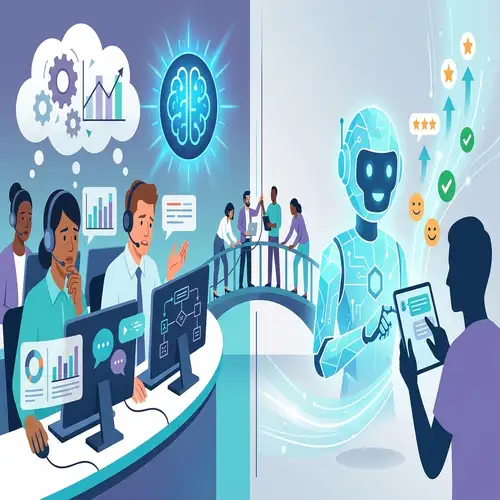
The announcement came with all the usual Silicon Valley swagger. Benioff, speaking on a podcast, described AI-driven support as “radical augmentation,” a bold new frontier where humans and machines collaborate to solve customer problems faster, cheaper, and at scale. To hear him tell it, Salesforce’s AI agents—part of a platform called Agentforce—are not only holding their own in customer interactions but delivering customer satisfaction (CSAT) scores comparable to their human counterparts. A million and a half customer conversations handled by machines—and Salesforce still sees green lights on its dashboards.
But here’s the kicker: while Salesforce’s AI experiment is undoubtedly a technological marvel, it’s also a stark reminder of the trade-offs that come with progress. For every efficiency gained, there’s a human story lost in the shuffle. And for all the talk of redeployment and “rebalancing,” 4,000 fewer people in the support division is impossible to ignore.
Automation’s Double-Edged Sword
Customer support has always been ripe for disruption. It’s repetitive, high-volume, and emotionally draining work. The kind of job that can leave even the most patient human feeling like a cog in a machine. Enter AI. With the rise of sophisticated natural language processing (NLP) models and machine learning algorithms, companies like Salesforce, Zendesk, and Microsoft have been racing to automate the helpdesk. The promise? Faster resolutions, lower costs, and happier customers.
And to some extent, they’re delivering. Salesforce’s Agentforce, for example, isn’t just a chatbot. It’s a full-blown virtual agent capable of handling complex queries, escalating issues when necessary, and even generating leads for the sales team. Benioff claims the technology has unlocked new opportunities, like reaching out to the 100 million leads Salesforce never had the manpower to address. That’s 10,000 new conversations per week, many of which are now turning into revenue.
It’s hard to argue with numbers like that. AI isn’t just a cost-cutting tool; it’s a growth engine. And for businesses that have long struggled with staffing shortages and ballooning customer service budgets, it’s a godsend.
But dig a little deeper, and the cracks start to show. While Salesforce touts its “omnichannel supervisor” model—where AI and human agents work side by side—the reality is that the balance is shifting heavily in favor of machines. And customers, for all their supposed satisfaction, are often left navigating a labyrinth of automated menus and scripted responses before they ever reach a human. If they reach one at all.
The Human Touch: A Dying Art?
The irony of AI in customer support is that it promises to make interactions more personal, yet often feels anything but. A machine might be able to handle a billing query or reset a password, but can it calm an irate customer whose account was hacked? Can it empathize with someone who just lost their job and can’t pay their subscription fee? These are the moments where human agents shine—and where AI still falls flat.

Salesforce might argue that its remaining 5,000 support agents are now free to focus on high-touch, emotionally charged cases. But the reality is that AI often creates a false sense of efficiency. By automating the easy stuff, companies risk overburdening their human agents with the most difficult and emotionally draining tasks. Burnout, already a major issue in customer support, could escalate as a result.
There’s also the question of trust. When customers know they’re dealing with a machine, their expectations shift. Some will welcome the speed and convenience. Others will feel alienated, even betrayed. The challenge for companies like Salesforce is striking the right balance—using AI to enhance the customer experience without eroding the human connection that builds loyalty over time.
Playing Devil’s Advocate: Is AI Really Cheaper?
Here’s a contrarian take: what if AI isn’t actually the cost-saving miracle it’s made out to be? Sure, Salesforce can point to reduced headcount and increased efficiency, but what about the hidden costs? Training AI systems, integrating them into legacy workflows, and maintaining their accuracy over time is no small feat. And let’s not forget the reputational risks. A single high-profile failure—like an AI agent mishandling a sensitive issue—can cost a company far more than it saves.
There’s also the question of long-term ROI. AI might be cheaper than humans today, but as the technology evolves, so will its price tag. Companies that jump on the automation bandwagon too quickly could find themselves locked into costly upgrades and licensing fees down the line. Meanwhile, competitors who invest in a hybrid approach—leveraging both AI and human expertise—might end up with a more sustainable model.
The Road Ahead: From Disruption to Partnership
Despite these challenges, it’s hard to deny that AI is transforming customer support for the better. For businesses, the benefits are obvious: lower costs, faster response times, and the ability to scale operations without hiring armies of agents. For customers, the payoff is more nuanced. While some will bemoan the loss of human interaction, others will embrace the convenience of 24/7 support that doesn’t require waiting on hold.
The real test for companies like Salesforce will be how they manage the transition. Can they redeploy displaced workers in meaningful ways, as Benioff claims? Will they invest in upskilling their remaining staff, turning human agents into AI supervisors and strategists? And perhaps most importantly, will they listen to their customers and adapt their approach based on feedback?
A Warning for the Industry
Salesforce’s gamble on AI-driven support is a wake-up call for the entire customer experience industry. The question isn’t whether AI will reshape customer support—it already is. The question is how companies will navigate the ethical, financial, and operational challenges that come with it.
For every glowing case study of AI success, there are cautionary tales of rushed implementations, alienated customers, and disillusioned employees. The companies that thrive in this new era will be the ones that embrace the complexity—balancing automation with empathy, efficiency with humanity.
And for Salesforce? The stakes couldn’t be higher. If Benioff’s vision pays off, the company will emerge as a leader in the next wave of customer experience innovation. If it stumbles, it could become a cautionary tale for an industry still finding its footing in the age of AI.
As we hurtle into this brave new world, one thing is certain: the future of customer support isn’t just about technology. It’s about trust, transparency, and the delicate art of making customers feel valued—whether they’re talking to a human or a machine.